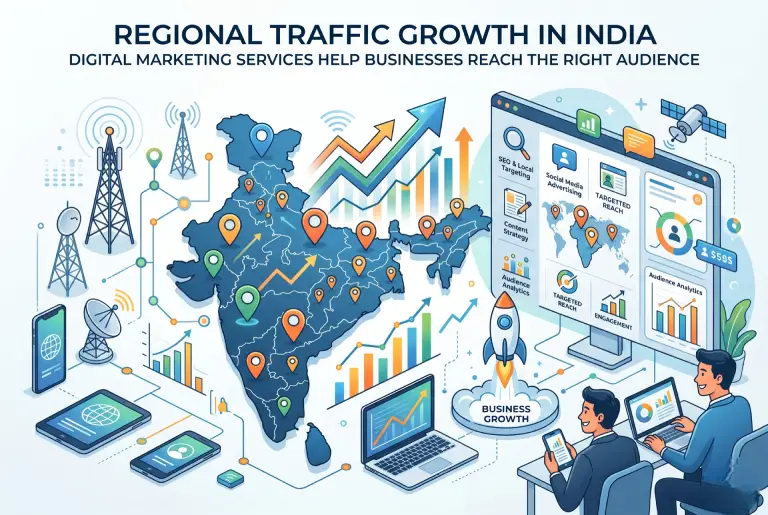
In today’s highly competitive Indian market, understanding regional traffic growth and leveraging digital marketing strategies are crucial for businesses aiming to expand their reach effectively. As India continues to witness rapid digital adoption across its diverse regions, companies must adapt their marketing efforts to target local audiences precisely. Digital marketing services offer tailored solutions that enable brands to connect with consumers in specific areas, fostering brand loyalty and increasing conversions. This comprehensive approach not only boosts regional traffic but also ensures businesses remain relevant within their targeted markets. In this blog post, we will explore how digital marketing services contribute to regional traffic growth in India and how businesses can utilize these tools to reach the right audience with precision and efficiency.
The Significance of Regional Traffic Growth in India
Understanding the importance of regional traffic growth is fundamental for any business aiming to succeed in India’s expansive market. Regional traffic refers to visitors from specific geographic locations—cities, states, or rural areas—that engage with a business’s online presence. For Indian enterprises, focusing on regional traffic is vital because consumer preferences vary significantly across different regions due to cultural, linguistic, and socio-economic differences. By tapping into regional traffic, businesses can customize their messaging and offerings to resonate more deeply with local audiences. This targeted approach results in higher engagement rates, increased footfalls (for brick-and-mortar stores), and ultimately, better sales performance. Moreover, focusing on regional growth helps smaller businesses compete against larger corporations by creating a niche presence within localized markets. As digital channels become more sophisticated, the ability to analyze and optimize regional traffic has become an essential component of successful marketing strategies in India.
- Regional traffic enhances local customer engagement.
- Customization of content increases relevance and trust.
- Localized SEO improves visibility in regional search results.
- Targeted advertising reduces wastage of marketing budget.
- Small businesses can carve out niche markets through focused regional campaigns.
Effective management of regional traffic growth allows businesses to build a loyal customer base within specific areas while expanding their overall market footprint. Therefore, investing in digital marketing tools that enhance regional targeting is indispensable for sustainable growth in India’s dynamic landscape. – Regional Traffic Growth in India
How Geotargeting Boosts Regional Traffic
Geotargeting is a cornerstone technique within digital marketing that directly impacts regional traffic growth by delivering personalized content based on user location. When implemented correctly, geotargeting ensures that potential customers see offers, advertisements, and information relevant to their specific region or city. This localization increases the likelihood of engagement because consumers prefer seeing messages that reflect their immediate environment or cultural context. For Indian businesses looking to grow regionally, geotargeting enables precise ad delivery through platforms like Google Ads, Facebook Ads, and programmatic advertising networks. It allows marketers to allocate budgets efficiently by focusing on high-potential zones while avoiding wastage on irrelevant audiences elsewhere. Additionally, geotargeting supports mobile marketing efforts given India’s significant smartphone penetration; location-based notifications can prompt immediate visits or inquiries from nearby users.
Elaborating further, effective geotargeting requires accurate data collection from IP addresses, GPS signals, or device identifiers which help define geographic boundaries clearly. Marketers should also combine geotargeting with demographic insights such as age groups or income levels for even sharper precision. This strategy facilitates customized campaigns that align perfectly with local consumer behaviors and preferences.
- Use GPS data for real-time location targeting during peak hours.
- Combine demographic data with geolocation for refined audience segmentation.
- Deploy localized offers during regional festivals or events.
- Adjust bidding strategies based on geographic zones for cost efficiency.
- Regularly update geographic data to maintain targeting accuracy.
In summary, geotargeting significantly amplifies regional traffic by ensuring marketing efforts are locally relevant and timely—key factors for success in India’s diverse markets.
Localized Content Marketing: Connecting With Regional Audiences
Localized content marketing plays a pivotal role in helping businesses tap into regional traffic streams by creating meaningful connections with local audiences. In India’s multilingual society with varied cultural nuances, generic content often fails to generate engagement at the desired scale. Instead, tailored content—whether it’s blogs written in regional languages, culturally relevant visuals, or region-specific testimonials—resonates more profoundly with local consumers. Digital marketing services facilitate the development of such targeted content strategies that reflect local traditions, festivals, or societal values while maintaining brand consistency.
Furthermore, localized content encourages sharing among community groups and social circles which exponentially increases organic reach within specific regions. This form of marketing enhances trustworthiness since consumers perceive brands as genuinely invested in their local culture. To maximize effectiveness, companies should research popular keywords used locally via tools like Google Keyword Planner or SEMrush tailored for Indian languages and dialects.
In addition to linguistic adaptation:
- Develop region-specific landing pages optimized for local search terms.
- Incorporate local success stories or case studies into your content.
- Use culturally relevant imagery and symbols.
- Engage local influencers who understand community nuances.
- Regularly monitor feedback from regional audiences to refine messaging.
By deploying localized content marketing effectively within digital campaigns, businesses can forge authentic relationships with regional consumers—driving sustained growth in India’s diverse marketplace.
Leveraging Social Media for Regional Engagement
Social media platforms have revolutionized how Indian companies connect with their target audiences at a regional level. These channels provide instant access to vast pools of potential customers segmented by geography through built-in targeting options on platforms like Facebook, Instagram, Twitter, and LinkedIn. Digital marketing services leverage advanced social media advertising tools that enable precise demographical and geographical segmentation—ensuring promotional messages reach the right people at the right time.
Moreover, social media fosters two-way communication between brands and consumers — an essential factor for building trust within communities. Through regular interactions such as comments responses or localized campaigns like festival greetings or community initiatives, companies deepen relationships with regional followers. User-generated content from locals further amplifies authenticity; encouraging customers to share experiences using branded hashtags boosts organic visibility.
Additional strategies include:
- Creating region-specific social media pages or groups.
- Running location-targeted contests tied to local events.
- Collaborating with area-based influencers for authentic outreach.
- Using geofilters during festivals or public gatherings.
- Monitoring analytics regularly to optimize outreach efforts.
Harnessing social media’s power allows brands not only to increase regional website traffic but also foster brand loyalty rooted firmly within local communities—a crucial aspect for long-term success in India’s diverse regions.
Search Engine Optimization (SEO) Focused on Regional Keywords
SEO remains one of the most effective methods for driving targeted regional traffic organically across India’s vast digital landscape. Optimizing websites for local search involves incorporating region-specific keywords into metadata such as titles and descriptions while creating high-quality content aligned with those search terms. Digital marketing services help identify keywords relevant to particular cities or states—such as “best restaurants Bengaluru” or “affordable electronics Mumbai”—that prospective customers are actively searching for online.
Local SEO extends beyond keyword integration; it includes optimizing Google My Business profiles accurately with current contact details and reviews reflecting genuine customer experiences from specific locales. Structured data markup can also enhance visibility through rich snippets showing ratings or event details relevant locally.
Further elaboration involves:
- Building backlinks from regionally authoritative websites.
- Ensuring NAP (Name/Address/Phone) consistency across listings.
- Encouraging satisfied customers from targeted areas to leave reviews.
- Creating localized blog posts addressing specific community needs or questions.
- Engaging with local directories like Justdial or Sulekha.
Implementing robust SEO practices focused on regional keywords dramatically increases organic visibility within targeted Indian markets—bringing consistent inbound traffic aligned precisely with business goals.
Data Analytics & Insights: Fine-Tuning Regional Campaigns
Data analytics forms the backbone of successful digital marketing strategies aimed at boosting regional traffic growth across India. Analyzing user behavior patterns provides invaluable insights into what resonates most within each locality—allowing marketers to tailor campaigns accordingly. Digital marketing services deploy advanced tools such as Google Analytics or heatmaps that track visitor origins alongside interaction metrics which reveal preferred content types or peak engagement times per region.
Regular analysis helps identify underperforming zones so resources can be reallocated efficiently while scaling up successful initiatives elsewhere. Segmenting data based on demographics like age groupings combined with geographic info yields detailed customer personas unique to each area—facilitating hyper-targeted advertising efforts that deliver higher ROI.
To optimize ongoing campaigns:
- Monitor conversion rates from different regions continuously.
- Use A/B testing tailored messages for various locales.
- Leverage predictive analytics models for future planning.
- Collect direct feedback through surveys embedded within campaigns.
Through diligent data-driven adjustments informed by comprehensive insights into regional behaviors and preferences—and acting swiftly upon them—businesses can maximize their impact on each targeted market segment across India.
Final Thoughts: Embracing Regional Strategies for Long-Term Growth
The rapid expansion of internet connectivity, coupled with India’s cultural diversity, necessitates a strategic focus on regional traffic growth through digital marketing services. Businesses that invest wisely in localization tactics—including geotargeting, localized content creation, and social media engagement tailored by geography—and rigorous SEO practices will find themselves well-positioned within competitive landscapes across various states and cities. By continuously analyzing data insights and refining campaign approaches accordingly, organizations can ensure they reach the right audience at the right time—and convert these interactions into lasting customer relationships.
As India evolves into a digitally driven economy with increasingly sophisticated consumer behaviors across regions, embracing these targeted strategies becomes paramount—not just for short-term gains but as part of a sustainable long-term growth plan rooted firmly in understanding local nuances and preferences worldwide.
Topic: How is Digital Marketing Different From Traditional Marketing?