
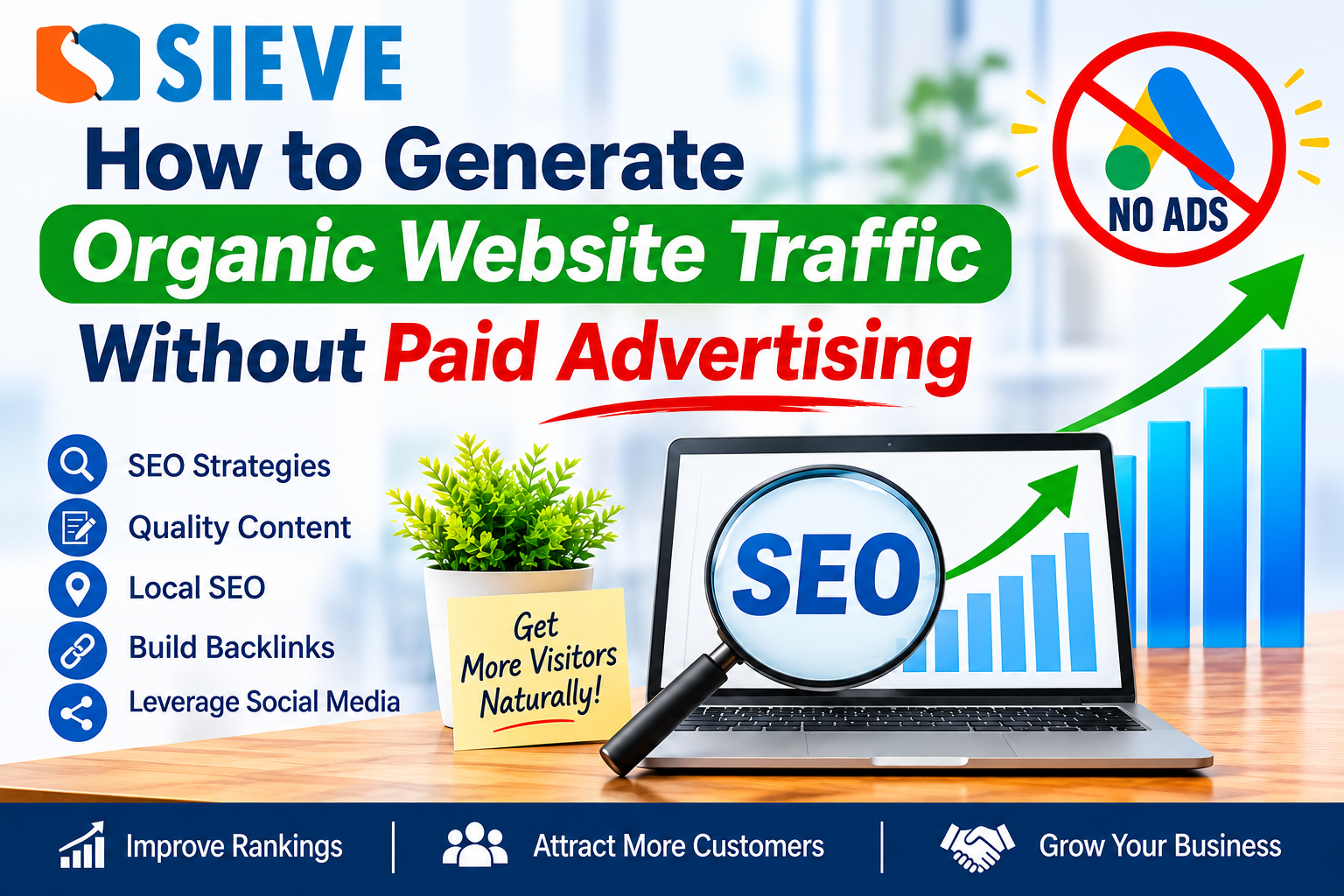
Introduction
Generating website traffic is essential for every business looking to establish a strong online presence. However, many small businesses and startups cannot afford to spend large amounts of money on Google Ads, Facebook Ads, and other paid advertising campaigns.
The good news is that businesses can attract visitors through organic website traffic without investing in paid promotions. By implementing effective Search Engine Optimization (SEO), creating valuable content, optimizing website performance, and building a strong online presence, businesses can attract potential customers consistently.
Organic traffic refers to visitors who discover your website through unpaid search engine results, such as Google and Bing. Unlike paid advertising, organic traffic can deliver long-term results when supported by a consistent digital marketing strategy.
In this guide, we will explore practical strategies to generate organic website traffic without paid advertising.
1. Focus on Search Engine Optimization (SEO)
Search Engine Optimization is one of the most effective ways to generate organic website traffic. SEO helps search engines understand your website content and display relevant pages when users search for related information.
To improve your website’s SEO:
- Use relevant keywords naturally throughout your content.
- Write descriptive SEO-friendly page titles and meta descriptions.
- Optimize headings using H1, H2, and H3 tags.
- Add internal links between related website pages.
- Optimize images with descriptive file names and alt text.
- Improve website loading speed and mobile responsiveness.
For example, a digital marketing agency in Hyderabad can target keywords such as “SEO services in Hyderabad” or “best digital marketing company in Hyderabad” to reach potential local customers.
Consistent SEO optimization helps improve search visibility and attract visitors who are actively searching for your services.
2. Create High-Quality and Helpful Content
Content marketing plays a significant role in organic traffic growth. Publishing useful, informative, and engaging content helps attract visitors and establish your business as a trusted source of information.
Start by identifying the questions your target audience frequently asks. Create blog posts, tutorials, guides, and industry-related articles that provide practical solutions.
For example, a website development company can publish articles such as:
- How to Choose the Right Website Development Company
- WordPress vs Custom Website Development
- Why Every Business Needs an SEO-Friendly Website
- Top Website Design Trends for 2026
Make sure your content demonstrates experience, expertise, and trustworthiness. Avoid publishing articles only to include keywords. Focus on providing genuine value to readers.
Publishing consistently can help your website target more relevant search queries and attract new audiences.
3. Perform Effective Keyword Research
Keyword research helps you understand what your potential customers are searching for online. Choosing the right keywords allows you to create content that matches user search intent.
Use keyword research tools such as:
- Google Keyword Planner
- Google Search Console
- Google Trends
- Ahrefs
- Semrush
- Ubersuggest
Look for keywords with relevant search demand, achievable competition, and strong business relevance.
For example, instead of targeting only a broad keyword like “digital marketing,” consider specific search phrases such as “digital marketing services for small businesses” or “affordable SEO services in Hyderabad.”
Long-tail keywords often attract visitors with more specific requirements and can be valuable for businesses targeting niche audiences.
4. Optimize Your Website for Local SEO
Local SEO is particularly important for businesses serving customers in specific cities or locations.
If your company provides services in Hyderabad, optimizing your website for location-based keywords can help attract customers searching for nearby service providers.
Important local SEO practices include:
- Create and optimize your Google Business Profile.
- Add your business name, address, and phone number consistently.
- Include relevant city and service keywords naturally.
- Add accurate business hours and service information.
- Encourage genuine customer reviews.
- Create dedicated location-based service pages.
For example, a business targeting Hyderabad customers can create useful pages around SEO services, website development, and digital marketing services in Hyderabad.
Local SEO improves your chances of appearing in relevant local search results and helps customers discover your business.
5. Improve Website Speed and Mobile Experience
Website performance directly affects user experience. Visitors are more likely to leave websites that take too long to load or are difficult to navigate on mobile devices.
Google also considers page experience and Core Web Vitals as part of its ranking systems.
To improve website performance:
- Compress and optimize images.
- Use reliable website hosting.
- Enable browser caching.
- Minimize unnecessary CSS and JavaScript.
- Use responsive website design.
- Remove unnecessary plugins and scripts.
- Monitor Core Web Vitals using Google PageSpeed Insights.
A fast, mobile-friendly website encourages visitors to explore more pages, improves usability, and supports your overall SEO strategy.
6. Use Social Media to Promote Your Content
Although social media engagement is not a direct Google ranking factor, social platforms can help increase content visibility and bring relevant visitors to your website.
Share your blog posts, service updates, educational content, and business achievements across platforms such as:
- YouTube
For example, when you publish a new SEO guide, create a short educational post highlighting its main tips and share a link to the complete article.
Participate in relevant online communities and answer questions genuinely instead of posting promotional links everywhere.
Social media can help your content reach new audiences, attract referral traffic, and build brand awareness.
7. Build Quality Backlinks
Backlinks are links from other websites that point to your website. Relevant, trustworthy backlinks can help search engines discover your content and understand your website’s authority.
Some effective backlink-building methods include:
- Publishing guest articles on relevant websites.
- Creating valuable resources that others want to reference.
- Participating in industry discussions.
- Building genuine business partnerships.
- Listing your business in reputable industry directories.
- Publishing original research and useful case studies.
Focus on earning relevant, high-quality links rather than purchasing large numbers of low-quality backlinks.
Avoid spammy link-building practices because they can negatively affect your website’s search performance.
8. Optimize Existing Website Content
Generating organic traffic does not always require publishing new blog posts. Updating existing content can also improve your website’s search visibility.
Review older articles and identify opportunities to:
- Update outdated information.
- Add relevant keywords where appropriate.
- Improve headings and readability.
- Include useful internal links.
- Replace outdated images.
- Add relevant FAQs.
- Improve meta titles and descriptions.
Use Google Search Console to identify pages receiving impressions but relatively few clicks. Improving their titles and descriptions may help increase click-through rates.
Regular content maintenance keeps your website useful, accurate, and relevant.
9. Use Internal Linking Strategically
Internal links connect different pages within your website. They help visitors discover related information and allow search engines to understand your website structure.
For example, a blog post about SEO strategies can link to your SEO service page, website development page, and related digital marketing articles.
Use descriptive anchor text that clearly explains what visitors can expect after clicking.
A well-organized internal linking structure improves navigation, distributes link equity across relevant pages, and helps search engines discover important content.
10. Monitor Website Traffic and SEO Performance
Tracking performance is essential to understanding whether your organic traffic strategies are working.
Use free tools such as:
Google Analytics 4: Track website visitors, traffic sources, user engagement, and conversions.
Google Search Console: Monitor search impressions, clicks, average positions, indexing issues, and search queries.
Google PageSpeed Insights: Analyze website performance and Core Web Vitals.
Review these metrics regularly to identify successful content, improve underperforming pages, and discover new keyword opportunities.
Remember that SEO is a long-term strategy. Results vary depending on competition, website history, content quality, and technical performance.
Benefits of Generating Organic Website Traffic
Investing in organic traffic growth offers several long-term benefits:
- Cost-effective marketing: Reduce dependence on continuous advertising expenditure.
- Long-term visibility: Well-optimized content can continue attracting visitors over time.
- Better audience targeting: Reach users actively searching for your products or services.
- Increased brand credibility: Strong search visibility helps build trust.
- More business opportunities: Relevant organic visitors can become enquiries and customers.
- Sustainable growth: Build a valuable digital presence that supports future marketing campaigns.
Conclusion
Generating organic website traffic without paid advertising is possible with the right combination of SEO, content marketing, keyword research, local SEO, technical optimization, and consistent content promotion.
Businesses should focus on creating helpful content, improving website performance, building relevant backlinks, and monitoring search performance regularly.
Although organic traffic growth requires patience and continuous effort, it can become a valuable source of website visitors and business enquiries over time.
At Sieve Softech, we help businesses strengthen their online presence through professional SEO, digital marketing, and website development solutions. With the right digital strategy, your business can improve search visibility, reach potential customers, and achieve sustainable online growth.
Frequently Asked Questions (FAQs)
1. How can I generate organic website traffic without paid advertising?
You can generate organic traffic through SEO, quality blog content, keyword research, local SEO, social media promotion, internal linking, and quality backlink building.
2. How long does it take to increase organic website traffic?
SEO results vary depending on competition, website condition, content quality, and optimization efforts. Many websites begin seeing measurable improvements within three to six months, although competitive keywords may take longer.
3. Is SEO better than paid advertising?
SEO provides opportunities for sustainable organic traffic, while paid advertising can deliver faster visibility. The right approach depends on your business goals and marketing budget.
4. Which free tools can help increase website traffic?
Google Search Console, Google Analytics 4, Google Trends, Google Keyword Planner, and Google PageSpeed Insights are useful free tools.
5. Does blogging help increase website traffic?
Yes. Publishing helpful, keyword-focused blog posts can help your website appear for more relevant search queries and attract potential customers.
6. Can social media generate organic website traffic?
Yes. Sharing useful content on social media can attract visitors, increase brand awareness, and generate referral traffic.
7. Why is local SEO important for small businesses?
Local SEO helps businesses reach customers searching for products or services in specific geographical areas, increasing local visibility and potential enquiries.