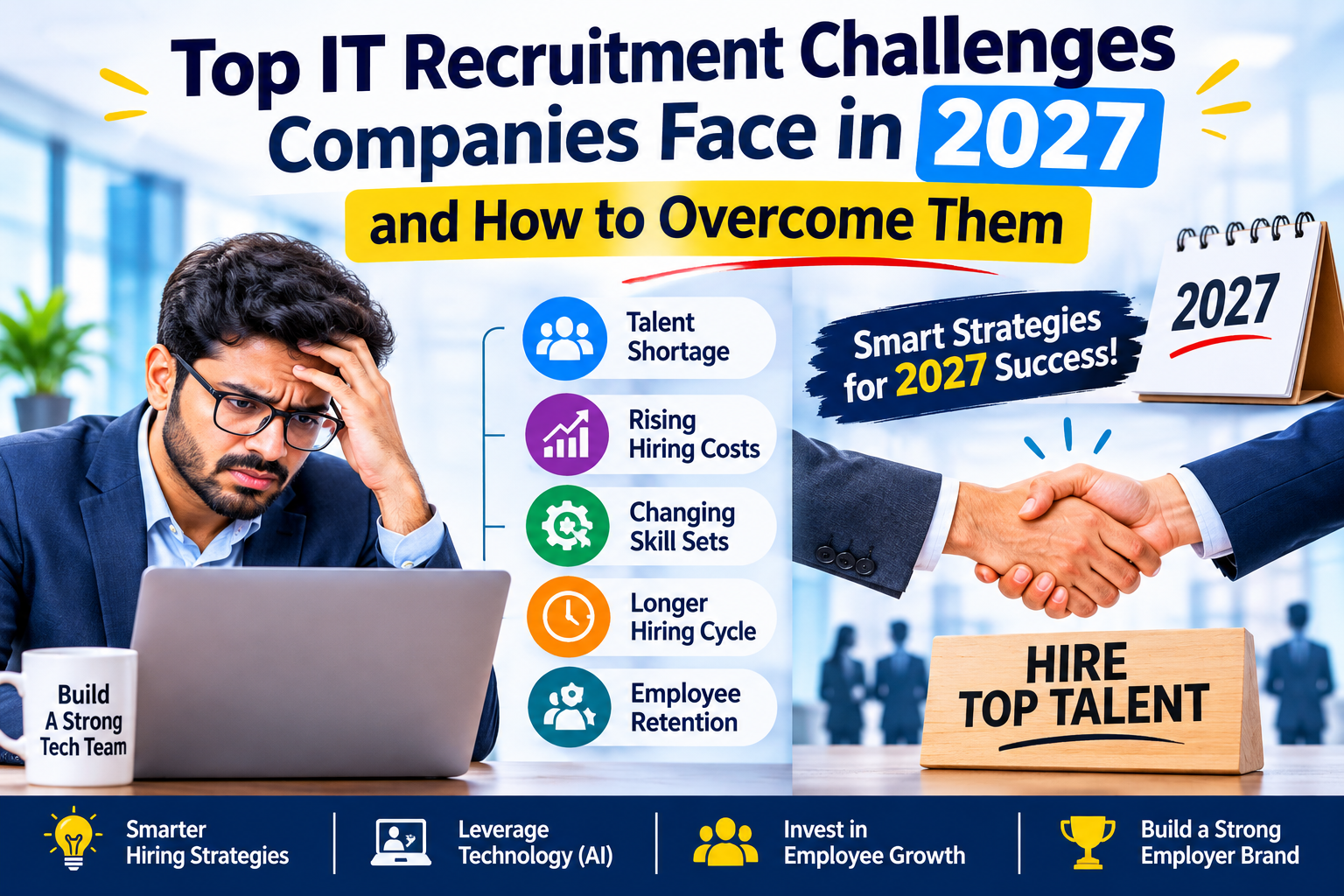
The IT industry continues to evolve rapidly, creating new opportunities and challenges for businesses searching for skilled technology professionals. In 2027, companies are expected to face increasing competition for experienced developers, software engineers, cloud specialists, cybersecurity experts, data analysts, and artificial intelligence professionals. Finding the right talent at the right time has become an important factor in business growth.
For startups, growing businesses, and established enterprises, IT recruitment is no longer just about filling vacancies. It involves identifying the right skills, evaluating candidates, reducing hiring costs, improving employee retention, and building teams that can adapt to changing technologies.
Understanding the top IT recruitment challenges companies face in 2027 can help organizations develop better hiring strategies and maintain a competitive advantage. In this article, we explore the major recruitment challenges and practical solutions businesses can implement to attract and retain top IT talent.
1. Shortage of Skilled IT Professionals
One of the biggest IT recruitment challenges in 2027 is finding professionals with the right technical skills. As businesses adopt artificial intelligence, cloud computing, cybersecurity, automation, and advanced data technologies, the demand for specialized professionals continues to grow.
Companies may struggle to find candidates experienced in:
- Artificial Intelligence and Machine Learning
- Cloud computing platforms such as AWS, Azure, and Google Cloud
- Full-stack development
- Cybersecurity and information security
- Data science and analytics
- DevOps and automation
The competition for these professionals can make recruitment slower and more expensive.
How to overcome this challenge:
Companies should invest in continuous talent sourcing, employee training, internship programs, and partnerships with professional IT staffing companies. Working with experienced recruitment specialists can also help businesses identify qualified candidates faster.
2. Increasing Competition for Top IT Talent
Technology companies are competing for the same pool of skilled professionals. Startups, multinational corporations, product-based companies, and IT service providers frequently target candidates with similar technical backgrounds.
Experienced professionals often receive multiple job offers, making it difficult for companies to secure their preferred candidates.
Salary is not the only deciding factor. Candidates also consider career growth, work flexibility, company culture, learning opportunities, and workplace benefits.
How to overcome this challenge:
Businesses should create attractive employment opportunities by offering competitive compensation, flexible working arrangements, professional development programs, and clear career progression paths.
A strong employer brand can also help organizations attract qualified IT professionals.
3. High Recruitment Costs
Hiring IT professionals can be expensive, especially when companies need specialized employees or multiple team members within a short period.
Recruitment expenses may include job advertisements, recruitment agency fees, technical assessments, background verification, interview coordination, and onboarding.
Repeated hiring due to unsuccessful placements can increase recruitment costs even further.
How to overcome this challenge:
Organizations should improve their recruitment process by defining job requirements clearly, using structured interviews, and prioritizing candidates who match both technical and organizational needs.
Partnering with an experienced IT staffing company can also help businesses optimize recruitment expenses and reduce the time spent on sourcing and screening candidates.
4. Longer Time-to-Hire
Finding the right IT candidate can take several weeks or even months. Delays often occur because of multiple interview rounds, lengthy approval processes, limited candidate availability, and unclear job descriptions.
When important technical positions remain vacant, businesses may experience project delays, increased workloads, and reduced productivity.
How to overcome this challenge:
Companies should simplify their recruitment process and establish clear hiring timelines.
Some effective practices include:
- Creating accurate and detailed job descriptions.
- Using applicant tracking systems (ATS).
- Conducting structured technical interviews.
- Reducing unnecessary interview rounds.
- Maintaining a database of qualified candidates.
- Working with specialized IT recruitment consultants.
A streamlined hiring process improves the candidate experience while helping businesses fill critical vacancies faster.
5. Difficulty Finding Candidates with the Right Technical Skills
A candidate may have an impressive resume but still lack the practical experience required for a particular position.
For example, a software developer may understand programming concepts but have limited experience building scalable applications. Similarly, a cloud engineer may know cloud fundamentals but lack hands-on experience managing production environments.
This gap between theoretical knowledge and practical skills creates difficulties for hiring managers.
How to overcome this challenge:
Companies should introduce practical technical assessments, coding tests, project-based evaluations, and skill-based interviews.
Instead of focusing only on academic qualifications or years of experience, recruiters should evaluate a candidate’s ability to solve real-world technical problems.
6. Employee Retention and High Attrition Rates
Recruitment does not end when a candidate accepts a job offer. Retaining skilled employees is equally important.
IT professionals frequently explore new opportunities for better salaries, career advancement, flexible working arrangements, and exposure to modern technologies.
High employee turnover increases recruitment expenses, affects project continuity, and creates additional pressure on existing teams.
How to overcome this challenge:
Businesses should focus on employee engagement and long-term career development.
Important retention strategies include:
- Providing competitive salary packages.
- Offering training and certification opportunities.
- Recognizing employee performance.
- Encouraging work-life balance.
- Creating transparent promotion policies.
- Building a positive workplace culture.
A strong employee retention strategy reduces repeated hiring requirements and improves organizational stability.
7. Adapting to AI and Automation in Recruitment
Artificial intelligence is changing how companies identify, evaluate, and recruit candidates. AI-powered recruitment platforms can support resume screening, candidate matching, interview scheduling, and recruitment analytics.
However, implementing these technologies also creates challenges. Poorly configured systems may overlook qualified candidates, introduce bias, or depend too heavily on automated decisions.
How to overcome this challenge:
Companies should use AI recruitment tools as support systems rather than complete replacements for human decision-making.
Recruiters should regularly evaluate automated screening criteria, maintain transparent hiring practices, and ensure that final recruitment decisions involve human judgment.
Combining technology with experienced recruitment professionals can improve hiring efficiency without compromising candidate quality.
8. Remote and Hybrid Hiring Challenges
Remote and hybrid working arrangements have expanded the talent pool for IT companies. Organizations can now recruit professionals from different cities and regions.
However, remote recruitment also introduces challenges related to communication, candidate verification, technical assessments, collaboration, and employee onboarding.
Hiring managers may find it difficult to evaluate whether candidates can work effectively in distributed teams.
How to overcome this challenge:
Companies should establish clear remote hiring procedures, conduct structured video interviews, use practical assessments, and communicate workplace expectations before making offers.
They should also implement effective onboarding processes to help new employees understand company culture, responsibilities, and communication practices.
9. Poor Candidate Experience During Recruitment
A complicated recruitment process can discourage talented professionals from accepting job offers.
Delayed interview feedback, unclear job descriptions, repeated interview rounds, and poor communication can damage a company’s reputation among job seekers.
Candidates who experience an inefficient hiring process may choose competing employers instead.
How to overcome this challenge:
Businesses should prioritize transparent communication throughout recruitment.
Recruiters should provide clear job information, communicate interview schedules, share timely feedback, and explain the next steps in the hiring process.
A positive candidate experience strengthens employer branding and increases the chances of attracting quality talent.
10. Choosing the Right IT Staffing Partner
Many organizations struggle to manage recruitment internally, particularly when they need specialized professionals or must fill multiple vacancies quickly.
Choosing an unsuitable recruitment partner can lead to poor candidate matching, delayed placements, and increased hiring expenses.
How to overcome this challenge:
Companies should evaluate IT staffing partners based on their industry experience, recruitment expertise, candidate network, screening procedures, and understanding of technical job requirements.
An experienced staffing partner can support businesses with candidate sourcing, screening, recruitment coordination, and talent acquisition.
Working with the right IT recruitment company allows internal HR teams to focus on strategic workforce planning and business operations.
Why Companies Should Consider Professional IT Staffing Services in 2027
As technology requirements become more specialized, professional IT staffing services can help businesses manage complex recruitment requirements.
An experienced IT staffing partner can provide several advantages:
- Access to qualified talent: Connect with professionals across different IT domains.
- Faster recruitment: Reduce the time spent searching and screening candidates.
- Cost optimization: Improve recruitment efficiency and manage hiring expenses.
- Technical expertise: Identify candidates based on specific technical requirements.
- Flexible hiring: Support permanent, contract, and project-based staffing needs.
- Reduced HR workload: Allow internal teams to concentrate on core business activities.
For organizations planning expansion in 2027, professional IT recruitment support can become an important part of their workforce strategy.
Why Choose Sieve Softech for IT Staffing Solutions?
Finding skilled IT professionals requires industry knowledge, an effective recruitment process, and an understanding of changing technology requirements.
Sieve Softech helps businesses explore IT staffing and technology recruitment solutions to support their workforce requirements. Whether an organization is looking for software developers, technical specialists, or experienced IT professionals, choosing the right recruitment approach can make a significant difference.
Businesses looking to strengthen their technology teams can explore the services offered by Sieve Softech and discuss their staffing requirements.
Visit: https://sievesoftech.com/
Conclusion
IT recruitment in 2027 will require companies to adopt smarter, faster, and more effective hiring strategies. Skilled talent shortages, increasing competition, rising recruitment costs, longer hiring cycles, and employee retention will remain important challenges for businesses.
Organizations that invest in modern recruitment practices, skill-based assessments, employer branding, and professional IT staffing partnerships will be better positioned to build successful technology teams.
The key is to look beyond simply filling vacancies and focus on hiring professionals who can contribute to long-term business growth.