
Introduction
In today’s digital-first world, users access websites from multiple devices, including smartphones, tablets, laptops, and desktops. Businesses that fail to provide a smooth browsing experience across all screen sizes often lose potential customers and search engine visibility. This is why Responsive Web Design SEO has become an essential part of modern digital marketing and website development.
Search engines prioritize websites that deliver fast, user-friendly, and mobile-optimized experiences. A responsive website automatically adjusts its layout, images, and content to fit different screen sizes, improving usability and accessibility for visitors.
Responsive web design not only enhances user experience but also supports SEO performance, improves engagement, reduces bounce rates, and increases conversion opportunities. Businesses that invest in responsive design can achieve stronger online visibility and long-term digital growth.
What Is Responsive Web Design SEO?
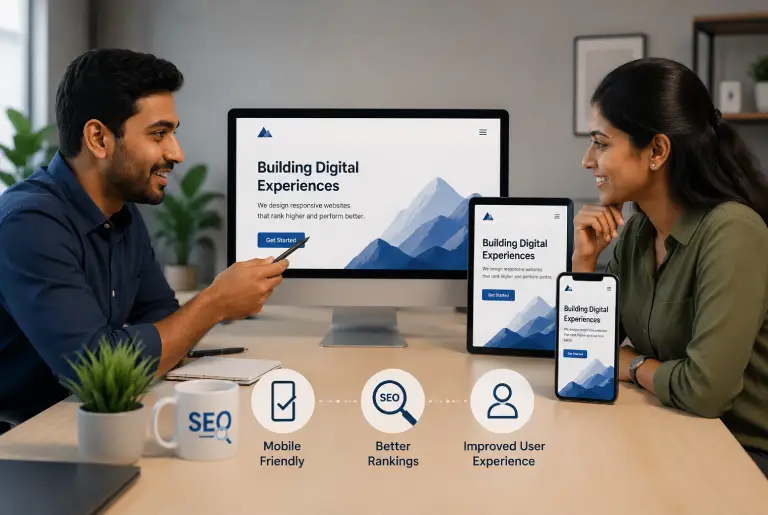
Responsive Web Design SEO refers to the process of designing and optimizing websites to function efficiently across all devices while maintaining strong search engine performance.
Responsive websites automatically adapt to different screen resolutions and device types without requiring separate mobile or desktop versions.
This SEO-focused web design approach helps businesses:
- Improve mobile usability
- Enhance website performance
- Increase search engine rankings
- Improve user engagement
- Support faster page loading
- Boost conversions
Responsive design combines technical optimization with user-focused experiences to improve overall website performance.
Why Responsive Web Design Matters for SEO
Search engines like Google prioritize mobile-friendly websites because mobile usage has become dominant worldwide.
A responsive website helps businesses meet modern search engine standards while improving visitor satisfaction.
Benefits of Responsive Web Design SEO
Improved Mobile Experience
Responsive websites provide smooth browsing experiences on smartphones and tablets.
Better Search Engine Rankings
Mobile-friendly websites often perform better in search engine results.
Faster Website Loading Speed
Optimized responsive designs improve website speed across devices.
Reduced Bounce Rates
Users stay longer on websites that are easy to navigate and read.
Increased Conversion Rates
Better user experiences encourage more inquiries, purchases, and sign-ups.
Easier Website Management
Businesses can manage a single responsive website instead of separate desktop and mobile versions.
How Responsive Web Design Supports SEO
Responsive design directly impacts several important SEO ranking factors.
1. Mobile-First Indexing
Search engines now use mobile-first indexing, meaning the mobile version of a website is prioritized for ranking and indexing.
Responsive websites help ensure:
- Consistent content across devices
- Better mobile usability
- Improved indexing performance
A mobile-optimized website is essential for maintaining strong search visibility.
2. Faster Page Loading Speed
Website speed is a critical ranking factor for SEO.
Responsive websites improve speed through:
- Optimized images
- Flexible layouts
- Mobile-friendly coding
- Reduced unnecessary elements
Fast-loading pages improve both SEO performance and user satisfaction.
3. Better User Experience (UX)
Search engines evaluate user behavior to measure website quality.
Responsive design improves:
- Navigation
- Readability
- Accessibility
- Interaction experience
Positive user experiences often lead to better engagement metrics and improved rankings.
4. Lower Bounce Rates
Visitors are more likely to leave websites that are difficult to use on mobile devices.
Responsive web design helps reduce bounce rates by:
- Improving readability
- Simplifying navigation
- Enhancing page usability
- Optimizing layouts for all devices
Lower bounce rates signal better content quality to search engines.
5. Improved Core Web Vitals
Core Web Vitals are important SEO performance metrics that measure user experience.
Responsive websites help improve:
- Loading performance
- Visual stability
- Interactive responsiveness
Optimizing Core Web Vitals supports stronger search rankings and website performance.
Key Features of Responsive Web Design
Modern responsive websites include multiple technical and design features.
Essential Responsive Design Features
Flexible Grid Layouts
Layouts automatically adjust based on screen size.
Mobile-Friendly Navigation
Responsive menus improve usability on smaller devices.
Optimized Images
Images resize efficiently without affecting performance.
Readable Typography
Text remains clear and accessible across devices.
Fast Performance
Efficient coding improves loading speed and responsiveness.
Touch-Friendly Design
Buttons and interactive elements work smoothly on touchscreens.
Importance of Mobile SEO in Responsive Design
Mobile SEO is closely connected with responsive web design.
Mobile SEO Best Practices Include:
- Mobile-friendly layouts
- Fast page speed
- Optimized content formatting
- Responsive images
- Structured data implementation
- Secure HTTPS browsing
A strong mobile SEO strategy improves both search visibility and customer experience.
Common Responsive Web Design SEO Mistakes
Many businesses experience SEO issues due to poor responsive design practices.
Common errors include the following:
- Slow mobile loading speed
- Unoptimized images
- Poor navigation structure
- Tiny text and buttons
- Blocking CSS or JavaScript
- Mobile content inconsistencies
Avoiding these issues helps maintain better SEO performance and usability.
Responsive Design and Conversion Optimization
Responsive websites improve customer trust and encourage conversions.
Conversion Benefits Include:
- Easier contact form submissions
- Better product browsing experiences
- Improved mobile shopping
- Faster checkout processes
- Enhanced customer engagement
User-friendly experiences often lead to higher conversion rates and customer satisfaction.
Best Tools for Responsive Web Design SEO
Businesses use advanced tools to test website responsiveness and SEO performance.
Popular Responsive Design Tools
- Google PageSpeed Insights
- Google Search Console
- GTmetrix
- Hotjar
- SEMrush
These tools help businesses analyze performance, identify issues, and improve mobile optimization.
Future Trends in Responsive Web Design SEO
Responsive design continues evolving alongside modern technologies and user behavior.
Emerging Trends Include:
- AI-powered personalization
- Voice search optimization
- Progressive web apps (PWAs)
- Mobile-first design strategies
- Interactive user experiences
- Advanced page speed optimization
Businesses adopting modern responsive design practices can improve long-term digital success.
Why Businesses Should Invest in Responsive Web Design SEO
Responsive websites provide long-term benefits for SEO, branding, and customer engagement.
Business Advantages Include:
- Better online visibility
- Improved customer experience
- Higher mobile engagement
- Stronger search rankings
- Increased lead generation
- Better conversion performance
A responsive website supports sustainable business growth in today’s mobile-driven digital environment.
Conclusion
In the modern digital landscape, responsive web design SEO is essential for businesses aiming to improve online visibility, enhance user experience, and increase conversions. Responsive websites help businesses adapt to changing user behavior while meeting search engine optimization standards.
From faster loading speeds and mobile usability to better search rankings and customer engagement, responsive design plays a major role in long-term digital success. Businesses investing in responsive SEO strategies can create stronger online experiences and achieve sustainable growth in competitive online markets.