
The Roadmap to Success: 10 Future proof SEO Strategies You Need Now
In the ever-evolving landscape of digital marketing, staying ahead of search engine algorithms and user expectations is paramount for sustained online success. The Roadmap to Success: 10 Future proof SEO Strategies You Need Now offers a comprehensive guide to adapt and thrive amidst rapid technological changes. As search engines become more sophisticated, traditional tactics no longer suffice; instead, forward-thinking strategies must be employed to ensure visibility and authority in your niche. This blog post delves into ten essential SEO practices designed not just for today but built to withstand future shifts in search behavior and technology. By embracing these strategies now, you can position your website for long-term growth, increased organic traffic, and competitive advantage.
1. Embrace User Experience as a Central Ranking Factor
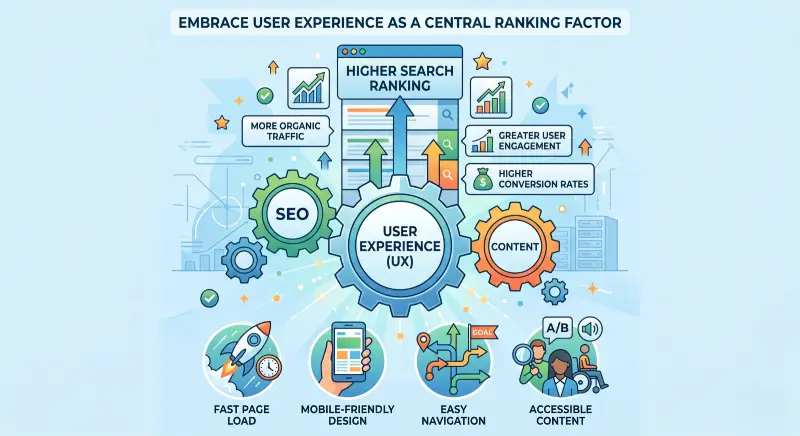
The first step on the Roadmap to Success involves prioritizing user experience (UX). Search engines like Google have increasingly emphasized UX signals as key ranking factors. A seamless, intuitive website encourages visitors to stay longer, reducing bounce rates and boosting engagement metrics that influence rankings. Enhancing UX involves optimizing site speed, ensuring mobile responsiveness, and creating easy-to-navigate layouts. It also means delivering valuable content that answers users’ questions efficiently while maintaining aesthetic appeal. Modern search algorithms analyze how users interact with your site—if visitors find what they need quickly and enjoy their experience, your rankings will naturally improve.
- Improve page load times by compressing images and leveraging caching.
- Use responsive design frameworks to ensure compatibility across devices.
- Simplify navigation menus to help users find information effortlessly.
- Incorporate clear calls-to-action that guide users toward desired outcomes.
- Regularly test your site’s usability using tools like Google’s Core Web Vitals.
Focusing on UX not only enhances satisfaction but also aligns with future search engine priorities. A positive user experience directly correlates with higher engagement levels and better ranking potential over time.
2. Prioritize Semantic Search Optimization
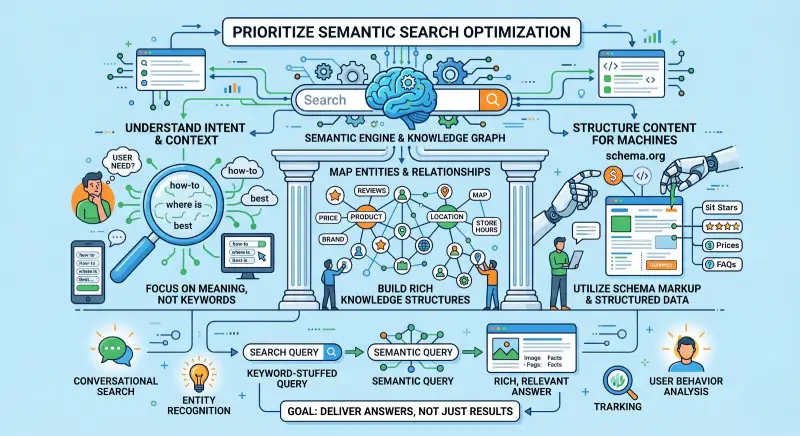
Semantic search has revolutionized how search engines interpret intent beyond keyword matching. The second pillar of future-proof SEO is understanding and optimizing for this more sophisticated approach. Instead of stuffing pages with keywords, focus on creating content that comprehensively covers topics relevant to your audience’s queries. This involves using natural language, related terms, and contextually relevant information that helps search engines understand the depth of your content. As voice search grows in popularity, semantic relevance becomes even more critical because voice queries tend to be conversational and long-tail.
To optimize for semantic search:
- Develop detailed topic clusters around core themes.
- Use structured data markup (schema.org) to clarify content meaning.
- Incorporate synonyms and related phrases naturally within your content.
- Answer common questions thoroughly within your articles.
- Create comprehensive guides that cover all aspects of a subject.
By aligning content with how users naturally speak and think about topics, you increase chances of ranking higher in nuanced searches—ensuring longevity in your SEO efforts.
3. Invest in E-A-T Principles: Expertise, Authority, Trustworthiness
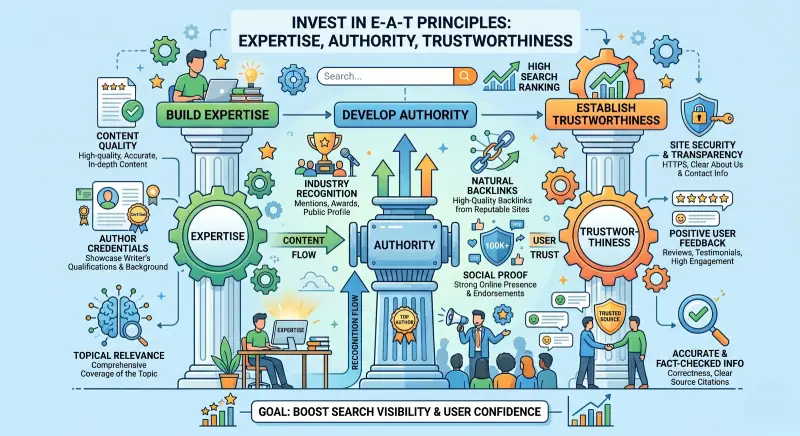
Google’s emphasis on E-A-T—Expertise, Authority, Trustworthiness—continues to grow as a way to assess quality content. The third component of this SEO roadmap underlines the importance of establishing credibility in your niche. Demonstrating expertise involves publishing well-researched, accurate information authored by knowledgeable individuals or recognized authorities. Building authority requires earning backlinks from reputable sources within your industry. Trustworthiness hinges on transparent practices such as secure website protocols (HTTPS), clear contact details, and honest disclosures.
To strengthen E-A-T:
- Showcase author bios highlighting credentials.
- Obtain backlinks from authoritative sites through guest posting or collaborations.
- Regularly update outdated content with new insights or data.
- Display testimonials or reviews that validate your credibility.
- Ensure your website complies with security standards and privacy policies.
Focusing on E-A-T not only improves rankings but also fosters trust among visitors—an essential factor for sustainable growth in competitive markets.
4. Leverage Artificial Intelligence for Content Optimization
Artificial Intelligence (AI) is transforming SEO by providing advanced tools for content analysis, keyword research, personalization, and automation. The fourth strategy involves integrating AI-driven solutions into your workflow to enhance efficiency and effectiveness. AI can help identify trending topics faster, generate data-driven insights about user intent, and optimize content for relevancy dynamically.
Some ways to leverage AI include:
- Using AI-powered keyword research tools like SEMrush or Ahrefs for discovering high-potential keywords.
- Implementing chatbots that improve user engagement and gather behavioral data.
- Employing AI-based content optimization platforms like Clearscope or MarketMuse.
- Analyzing large datasets rapidly to identify emerging trends or gaps in existing content.
- Personalizing website experiences based on visitor behavior patterns.
By harnessing AI technologies strategically, marketers can stay ahead of competitors who rely solely on manual processes—future-proofing their SEO efforts through innovation.
5. Focus on Mobile First Indexing
With mobile devices accounting for a significant portion of web traffic worldwide, Google’s shift towards mobile-first indexing emphasizes the importance of mobile optimization in future proof SEO strategies. Ensuring that your site provides a seamless experience across all devices is critical—not just desktop versions are evaluated anymore; mobile performance now determines rankings predominantly.
Key considerations include:
- Designing responsive websites that adapt fluidly to various screen sizes.
- Optimizing mobile load speeds by minimizing scripts and compressing images.
- Making touch elements easily clickable with appropriate spacing.
- Avoiding intrusive interstitials that hinder accessibility on mobile devices.
- Testing mobile usability regularly using Google’s Mobile-Friendly Test tool.
Prioritizing mobile ensures accessibility for users everywhere while aligning with Google’s indexing priorities—this dual benefit makes it an indispensable element of the roadmap toward success.
6. Harness Structured Data for Rich Snippets
Structured data markup plays a vital role in future-proofing SEO by enabling rich snippets—enhanced listings that stand out on SERPs (Search Engine Results Pages). Rich snippets can include ratings, FAQs, product details, event information, and more—all designed to improve click-through rates (CTR). Implementing schema.org markup helps search engines better understand the context of your content which can lead to improved visibility.
To effectively utilize structured data:
- Identify which types of schema are relevant (e.g., Article schema for blogs).
- Add JSON-LD code snippets directly into webpage HTML for clarity.
- Validate markup regularly with Google’s Rich Results Test tool.
- Keep schema implementations updated as new types emerge or evolve.
- Use rich snippets strategically around popular or high-converting pages.
Rich snippets serve as a visual cue attracting more clicks while signaling relevance—a crucial tactic in maintaining competitiveness amid changing algorithm dynamics.
7. Optimize Core Web Vitals
Core Web Vitals are a set of metrics introduced by Google focusing on real-world user experience signals such as loading performance (Largest Contentful Paint), interactivity (First Input Delay), and visual stability (Cumulative Layout Shift). These indicators are integral components of Google’s ranking algorithm now—and their importance will only grow over time.
To optimize Core Web Vitals:
- Minimize server response times by choosing reliable hosting providers.
- Reduce JavaScript execution blocking rendering paths.
- Use lazy loading techniques for images off-screen elements.
- Avoid layout shifts by setting size attributes for images/videos/ads beforehand.
- Conduct regular audits with PageSpeed Insights or Lighthouse tools.
Meeting these standards not only boosts rankings but also significantly enhances overall user satisfaction—key ingredients for long-term success.
8. Create Voice Search Optimized Content
As voice assistants become ubiquitous—from smartphones to smart speakers—the need to optimize content specifically for voice searches becomes undeniable. Voice queries tend to be conversational and question-oriented; thus, adapting your SEO strategy accordingly ensures you remain relevant in this growing segment.
Effective voice search optimization entails:
- Incorporating natural language phrases within your content.
- Structuring answers clearly at the beginning of paragraphs or sections.
- Targeting long-tail keywords phrased as questions (“How do I…?”).
- Creating FAQ pages addressing common user inquiries explicitly.
- Using schema markup to enhance understanding by voice assistants.
Anticipating this shift allows brands to capture traffic from voice searches early—an important element in future-proofing any SEO strategy.
9. Build Quality Backlinks Through Ethical Practices
Backlinks remain one of the most influential ranking factors; however, quality trumps quantity when it comes to link building strategies aimed at future-proofing SEO efforts. Focused outreach and ethical practices ensure backlinks add genuine value without risking penalties from spammy link schemes prevalent today.
Effective backlink strategies include:
- Developing high-quality content worth referencing organically.
- Engaging with industry influencers through collaborations or interviews.
- Contributing guest posts on reputable websites within your niche.
- Participating actively in relevant online communities or forums where links are naturally earned.
Building authentic relationships promotes sustainable link growth aligned with Google’s guidelines—thus safeguarding your site’s authority over time while expanding its reach organically.
10. Maintain Continuous Content Updates & Audits
Finally, the importance of ongoing content maintenance cannot be overstated when aiming for long-term success in SEO endeavors. Algorithms continually evolve; therefore, regularly auditing existing pages ensures they remain optimized according to current best practices while updating outdated information maintains credibility.
Strategies include:
- Performing periodic comprehensive audits using tools like Screaming Frog or SEMrush Audit Module
- Refreshing old blog posts with new data or insights
- Removing outdated or low-performing pages
- Updating internal links to improve site structure
- Monitoring performance metrics consistently
This proactive approach guarantees consistent relevance and authority over time—cornerstones necessary for enduring success amidst constant algorithm updates.
Navigating Your Future Success: A Final Reflection
Embarking on a journey toward sustainable online prominence requires adopting innovative yet proven SEO strategies tailored for the future landscape. The ten tactics outlined above provide a robust framework capable of adapting as search engines evolve their algorithms and prioritize different ranking factors over time. From enhancing user experience through optimized design principles to leveraging cutting-edge technologies like AI and structured data, each component plays an integral role in constructing an unassailable foundation for digital growth. Remember that continuous learning coupled with strategic implementation forms the cornerstone of staying ahead in an increasingly competitive environment; embracing these ten strategies today ensures you’ll be well-positioned tomorrow—and beyond—to achieve lasting success online.
Topic: SEO Services in Hyderabad: Complete Guide for Business Growth